STORY IN CIRCULATION 002
The Black Knight Satellite — Has an Alien Probe Really Watched Earth for 13,000 Years?
Tesla's signals, 1920s radio echoes, Cold War satellite reports, Duncan Lunan's star map and NASA photographs all survive in the record. The harder question is when these separate episodes became one story about an ancient alien satellite.
- Earliest located publication
- 1899–2002+ (composite trail)
- Origin
- A later internet legend assembled from twentieth-century records
- Source state
- Multiple primary and official records located · origin of the unified narrative still under review
- Last reviewed
- 2026-10-20
EVIDENCE AT A GLANCE
NASA STS-88 photo sequence
Verified — NASA catalogues the subject as space debris
Source ↓1928 long-delayed echo observations
Verified — contemporary reports in Nature
Source ↓1960 tracking of an unknown object
Verified — later identified as a Discoverer V capsule
Source ↓Lunan's Epsilon Boötis interpretation
Verified as a proposal — author later withdrew the translation
Source ↓A 13,000-year-old alien satellite
Not established
Tesla discovered Black Knight
Tesla's text contains no name, Earth-orbiting satellite or 13,000-year claim
Source ↓Where the story begins
The popular version says a dark alien probe has watched Earth from polar orbit for 13,000 years, leaving traces from Tesla to NASA. That continuity does not appear in the contemporary records; it emerges when later retellings splice separate episodes together.
Tesla — the record and the later addition
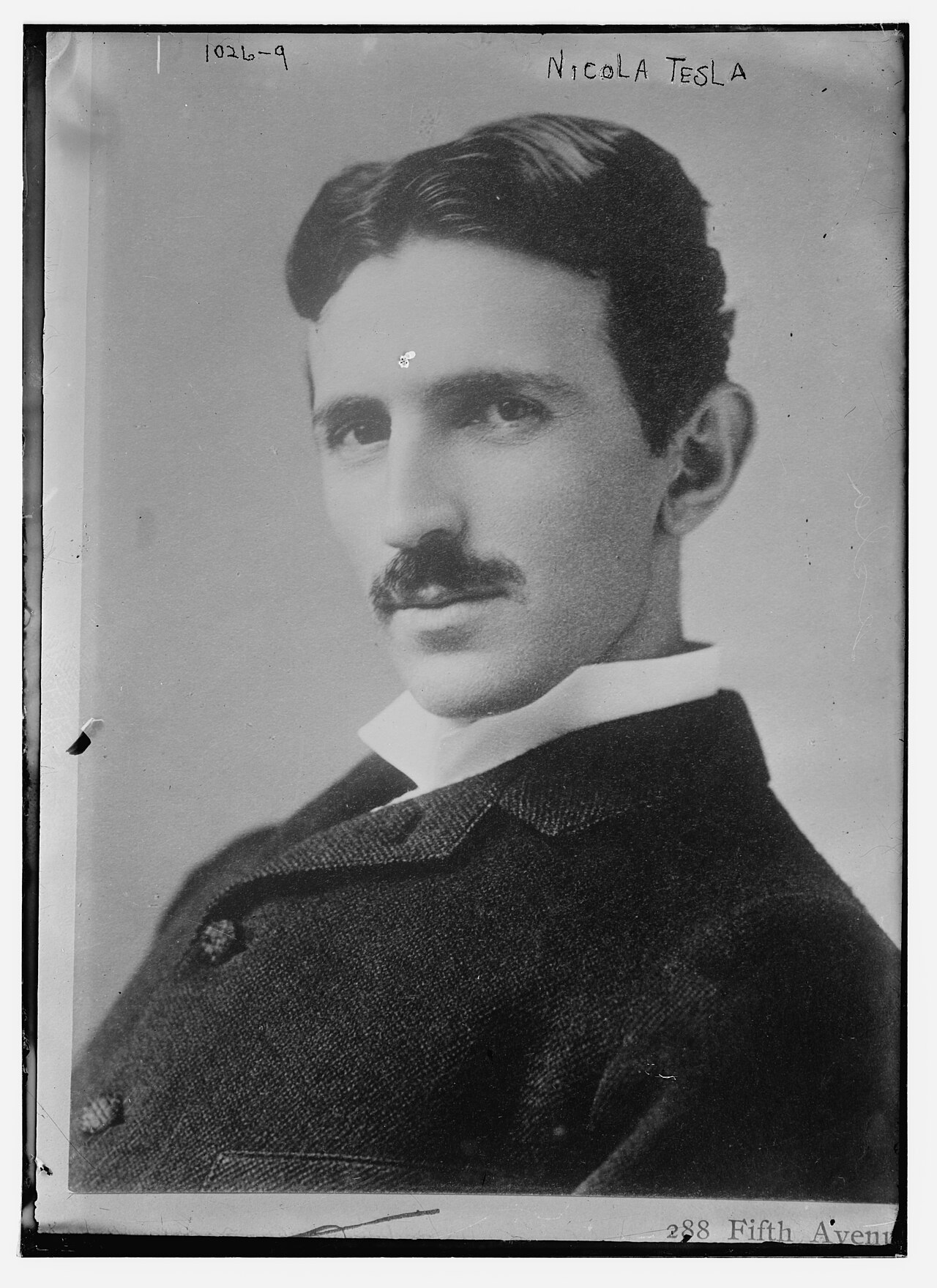
Tesla described faint, repeated signals received at Colorado Springs and interpreted their order as possibly intelligent and planetary. His 1901 text does not mention Black Knight, an Earth-orbiting satellite, an alien probe or 13,000 years. Those links were added later.
LDE — a genuinely observed radio anomaly
In 1928 Størmer and Hals reported echoes arriving seconds after 31.4-metre short-wave signals from station PCJJ at Hilversum. Later accounts describe delays from about three to fifteen seconds and rare events up to 25–30 seconds. Researchers considered auroral, ionospheric and magnetospheric propagation; observing the effect does not establish an alien repeater.
1954 — the ‘two satellites’ story and Tombaugh's real survey
Donald Keyhoe attributed reports of unidentified orbiting objects to an unnamed Pentagon source. Clyde Tombaugh separately conducted a US Army-supported search for small natural Earth satellites. The 1959 study preserved by NASA documents the search and its null result. No public radar record was located, and the claim and the survey should not be treated as one discovery.
1960 — the tracked ‘dark satellite’
A contemporary TIME report confirms that the US Navy's Dark Fence tracked an initially unidentified near-polar object from 31 January. A Soviet reconnaissance craft was feared, but the Defense Department identified it after record matching as the recovery capsule from Discoverer V, misplaced after its August 1959 launch. ‘Initially unknown’ is not the same as ‘ultimately extraterrestrial.’
Duncan Lunan — how Epsilon Boötis and 13,000 years entered the story
Lunan plotted LDE delays by reception order in 1972 and read the result as a star map, presenting an Epsilon Boötis probe hypothesis in Analog in 1974. The roughly 13,000-year date came from back-calculating when Arcturus would fit the pattern. Better 1920s records and stellar data led him to withdraw the entire translation in 1976. Although he later revisited possibilities, he explicitly rejected websites that equate his proposal with Black Knight.
STS-88 — the object in NASA's photographs
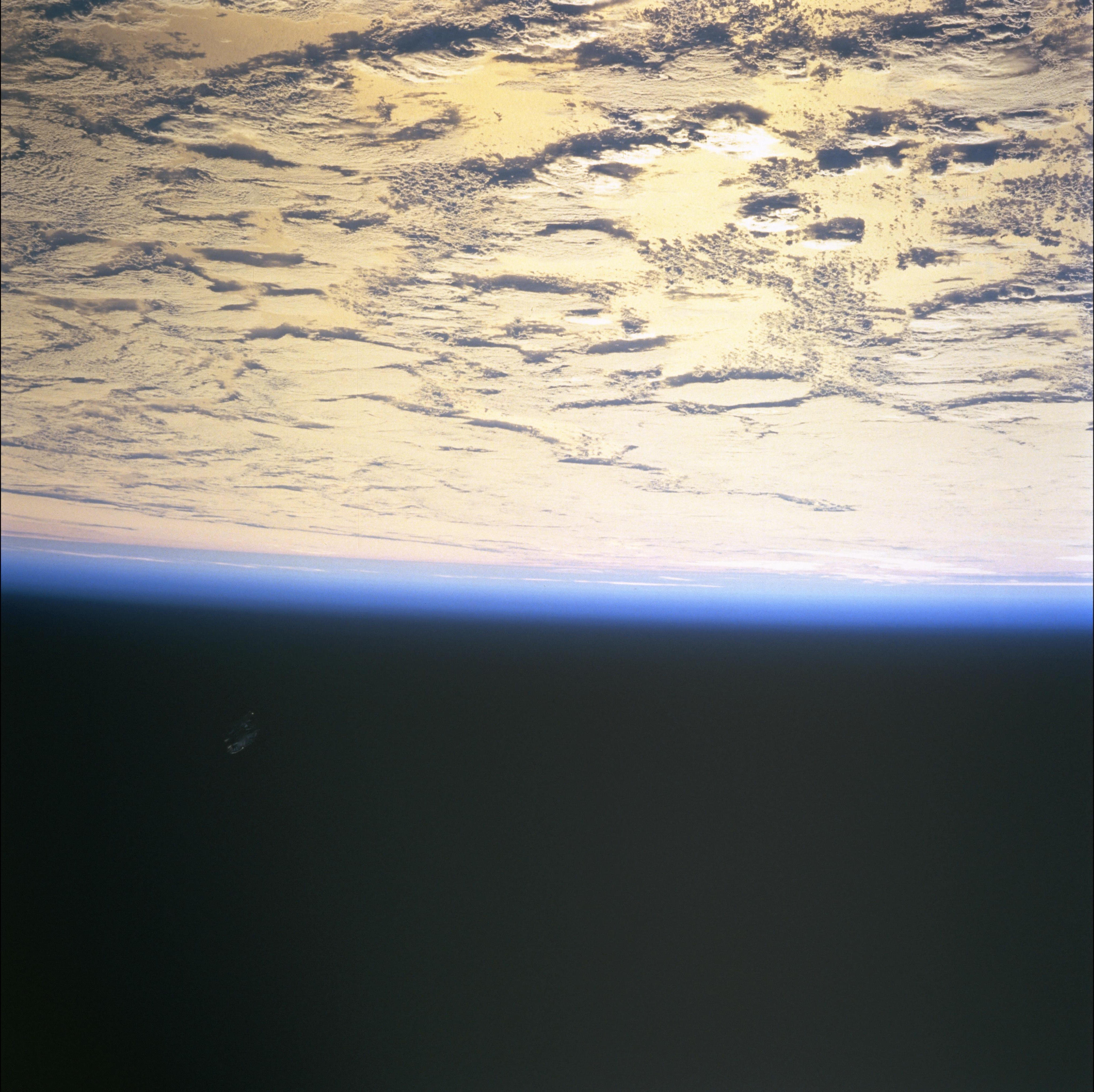
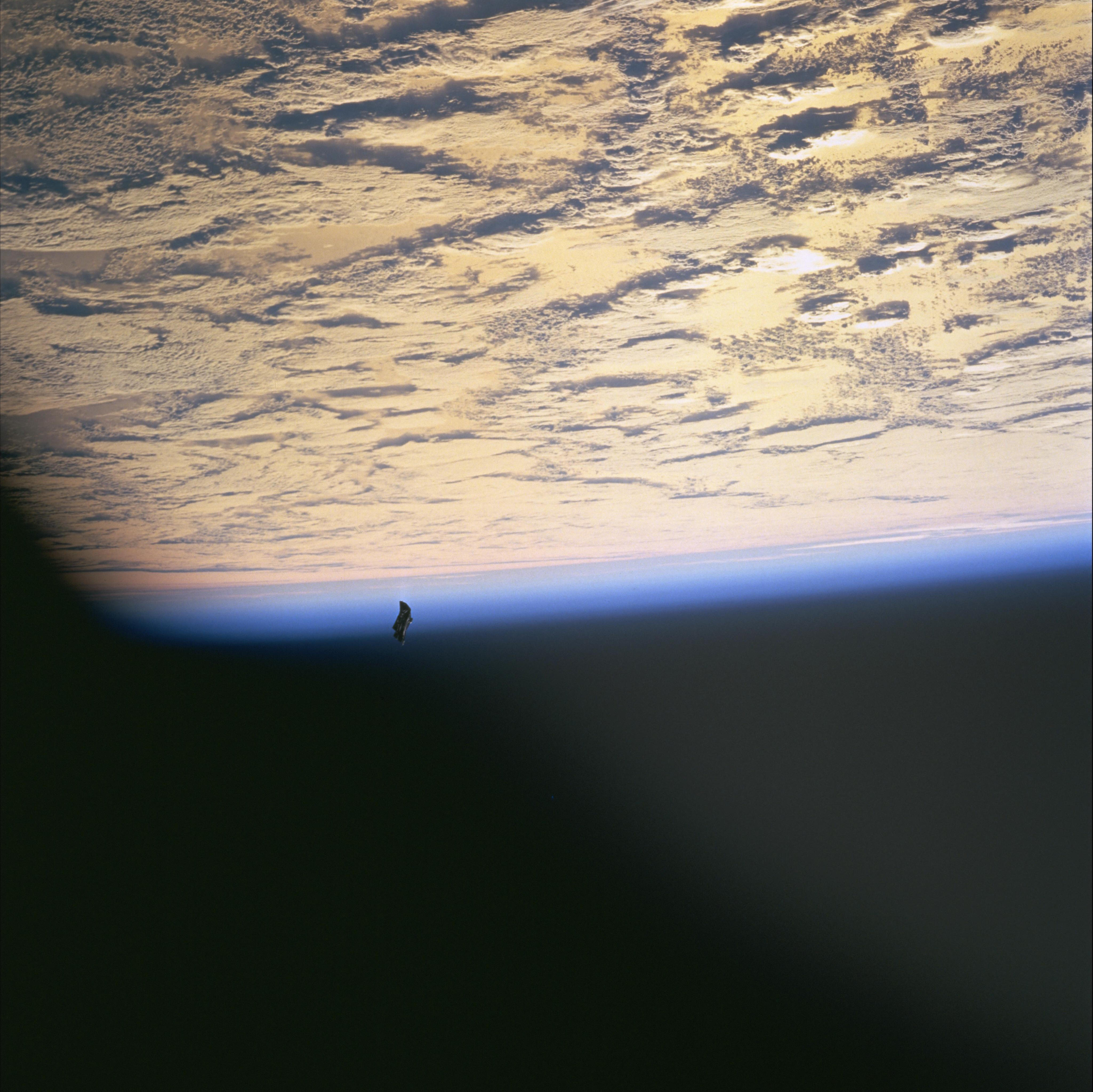
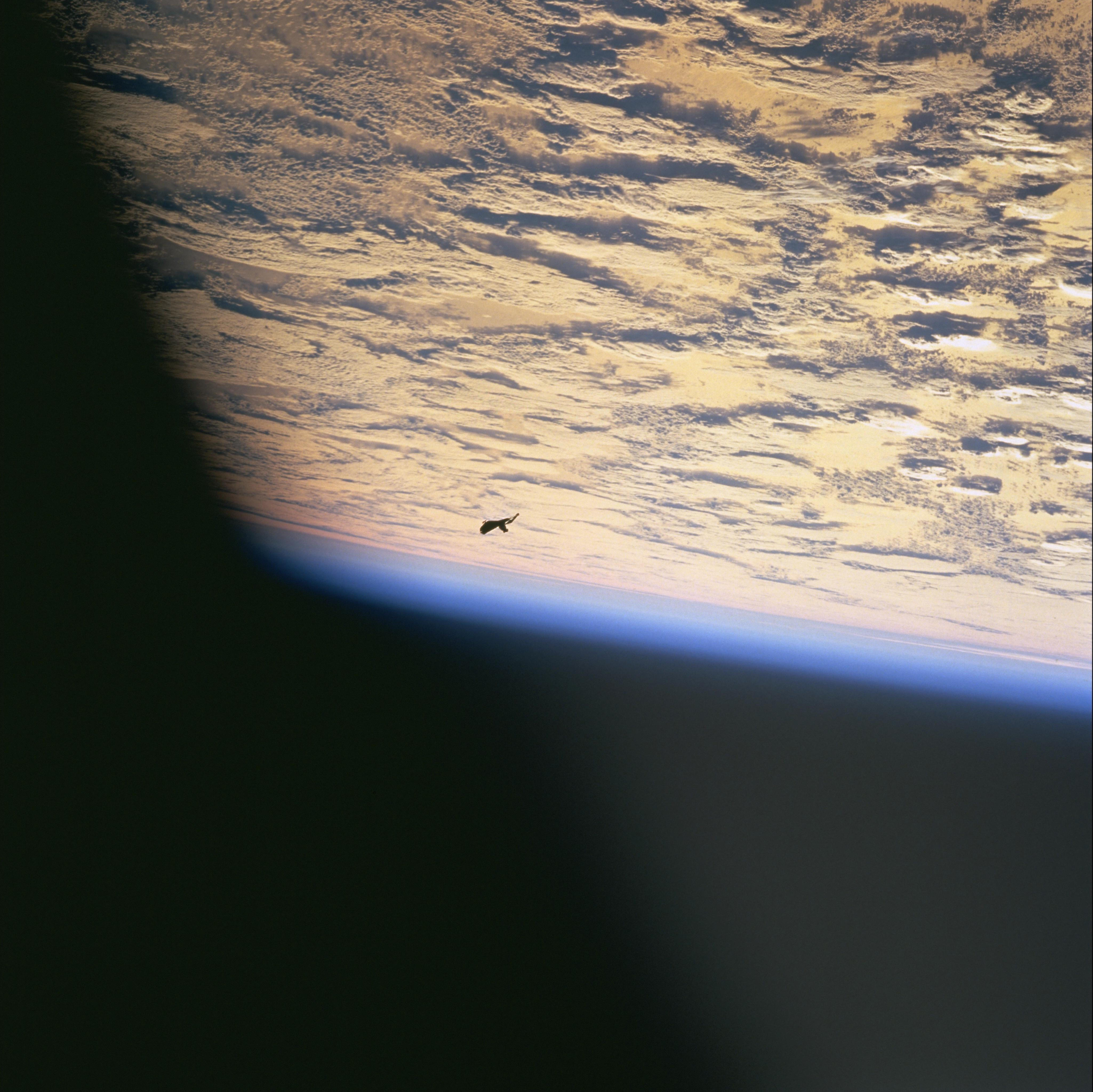
NASA frames 65, 66 and 67 were exposed between 20:16:41 and 20:17:20 GMT on 11 December 1998, from roughly 394–396 km using a Hasselblad with a 250 mm lens. NASA metadata labels the feature SPACE DEBRIS. The sequence shows a real object but does not, by imagery alone, establish its material or origin.
How strong is the thermal-cover explanation?
NASA's STS-88 record says several construction items, including a trunnion pin cover, floated away during EVA. James Oberg's reconstruction uses communications and orbital records to connect the photographed object to the escaped insulation cover. The loss itself is an official record; identification of the pictured object with that exact cover is a strongly supported expert reconstruction.
The real British Black Knight rocket
Britain's Black Knight was a 1950s–60s test rocket used for re-entry research. The Science Museum and Historic England document the vehicle and test site. The shared name is real, but no direct evidence was located that the rocket named the alien-satellite legend.
When did one legend emerge?
Lunan's 1970s work joined LDEs, Epsilon Boötis and a 13,000-year date, but it did not unite Tesla, the 1954 and 1960 episodes and STS-88 under one Black Knight object. The earliest combined trace Salgil has located is a 2002 fanzine review discussing John Keel that places Black Knight beside Lunan's 13,000-year star map. The first web post to add the STS-88 photographs to the full chain remains unidentified.
Story genealogy — separating records from connecting lines
Each episode below has a documentary trace, but the arrows do not mean one object persisted through them all. ‘Linked later’ marks editorial assembly by the legend, not historical continuity.
Tesla's signals and planetary speculation
A primary text, with no Black Knight or satellite claim.
Source ↓Long-delayed echoes reported
Echoes delayed by seconds are reported in Nature.
Source ↓‘Two unknown satellites’ press story
Keyhoe's unnamed-source claim becomes entangled with Tombaugh's survey.
Source ↓Dark Fence tracking
Initially unknown, then identified as a Discoverer V capsule.
Source ↓Lunan's star map and withdrawal
The Epsilon Boötis and 13,000-year reading appears and is later withdrawn.
Source ↓STS-88 photo sequence
An object catalogued by NASA as SPACE DEBRIS appears across frames.
Source ↓The internet composite
Separate episodes and images circulate as one Black Knight chronology; the first complete version is not yet identified.
Source ↓What is confirmed
Tesla's planetary speculation, the 1928 LDE reports, Tombaugh's natural-satellite search, the 1960 tracking and identification, Lunan's hypothesis and withdrawal, the STS-88 image sequence and the EVA cover loss are individually documented.
What is not confirmed
No public evidence establishes a 13,000-year-old alien probe, an Earth-surveillance mission, Tesla receiving that satellite, or NASA concealing an extraterrestrial origin.
What the record does not connect
Tesla's signals and LDEs, Keyhoe's claim and Tombaugh's survey, the Discoverer capsule and STS-88 debris, and Britain's Black Knight rocket and the alien satellite lack a documentary bridge showing they concern one object.
Why the story survives
The legend does not rely on one invented event. It borrows real anomalies, Cold War secrecy, an adventurous hypothesis and an official photograph with an uncanny silhouette. The documentary reality of each fragment lends borrowed credibility to the unproven whole.
Open question
Exactly when were a century of separate events first printed or posted as one ‘Black Knight Satellite’ chronology? The evidence suggests gradual assembly, but the earliest complete text including STS-88 remains under investigation.
VERSION CONFLICTS
The numbers change as the story is told
What ‘13,000 years’ means
- Lunan: an epoch inferred by fitting Arcturus in a plotted star map
- Later legend: the satellite's time in Earth orbit
The number changed meaning as the story circulated.
The STS-88 object
- NASA metadata: space debris
- Internet legend: alien satellite
The photographs are authentic; the alien-origin label is not in their metadata.
SOURCE LEDGER
What each source can—and cannot—establish
- 01Primary / preserved archiveNikola Tesla, ‘Talking with the Planets’ (1901) ↗
Documents Tesla's signals and planetary speculation; contains no Black Knight, satellite or 13,000-year claim.
- 02Scholarly sourceB. van der Pol, ‘Short Wave Echoes and the Aurora Borealis’ (Nature, 1928) ↗
Contemporary scholarly record of PCJJ 31.4-m transmissions and echoes delayed by seconds.
- 03Scholarly source‘Short Wave Radio Echoes’ (Nature, 1934) ↗
Summarises three-second and rare 25–30-second echoes and natural propagation discussions.
- 04Scholarly sourceClyde Tombaugh, ‘The Search for Small Natural Earth Satellites’ (1959) ↗
Technical account of Tombaugh's survey purpose, methods and results.
- 05Primary / preserved archiveAviation Week 1954 issue archive ↗
Contemporary publication trail for the 1954 story; Keyhoe's unnamed source is not official confirmation.
- 06Edited secondary sourceTIME, ‘Space Watch's First Catch’ (7 Mar 1960) ↗
Contemporary report of the tracking episode and identification as a Discoverer V recovery capsule.
- 07Claim-source materialDuncan Lunan, ‘Epsilon Boötis Revisited’ ↗
The author explains the hypothesis, the 13,000-year inference and his 1976 withdrawal of the full translation.
- 08Claim-source materialDuncan Lunan on the Black Knight conflation ↗
Rejects websites that identify his LDE work with the Black Knight satellite.
- 09Official / astronomical dataNASA photograph STS088-724-65 ↗
11 Dec 1998 20:16:41 GMT · SPACE DEBRIS · Hasselblad 250 mm.
- 10Official / astronomical dataNASA photograph STS088-724-66 ↗
11 Dec 1998 20:17:04 GMT · altitude 396 km · SPACE DEBRIS.
- 11Official / astronomical dataNASA photograph STS088-724-67 ↗
11 Dec 1998 20:17:20 GMT · SPACE DEBRIS · sequential frame.
- 12Official / astronomical dataNASA STS-88 mission record ↗
Records several construction items, including a trunnion pin cover, floating away during EVA.
- 13Edited secondary sourceJames Oberg, ‘STS-88 and the Black Knight’ ↗
An expert reconstruction from communications and orbital records, not a formal NASA finding.
- 14Official / astronomical dataScience Museum Group — Black Knight BK10 ↗
Museum collection record for the real British test rocket.
- 15Official / astronomical dataHistoric England — High Down test site ↗
Official historical record of the Black Knight programme and test facilities.
- 16Edited secondary sourceSimulacrum Meltdown #2 (2002) — Black Knight/Lunan juxtaposition ↗
An early combined trace located so far, not claimed as the first complete version of the internet legend.