ENGLISH RECORD 03
Gyeokam Yurok
格菴遺錄 · attributed to Nam Sago · surviving 1977 manuscript01 · WHAT IT IS
Overview
A record separating prophecies attributed to Nam Sago from the custody, source texts and editorial history of the surviving Gyeokam Yurok made public in 1977.
02 · ORIGINAL TEXT AND EARLIEST SOURCE
What can be traced?
03 · HISTORICAL BACKGROUND
The world behind the text
RECORD V2 · KEY QUESTIONS
Enough evidence—but not for every famous prediction
Yes. His dates and later reputation are documented, independently of this book.
No securely dated sixteenth-century manuscript of the current text has been established.
The manuscript donated to the National Library in 1977 and the printed edition from that year.
Custody, source texts, editing, language and later interpretation—not automatic prophetic accuracy.
PEOPLE · LAYERS OF AUTHORSHIP AND TRANSMISSION
Three people, three different roles
The attributed author, surviving-manuscript copyist and modern editor-publisher are recorded separately.Nam Sago
Joseon scholar and central figure in later prophetic tradition
- LIFE AND ROLE
- Known by the pen name Gyeokam and associated with the Yeongyang Nam clan, Nam Sago is described by the Encyclopedia of Korean Culture as a Joseon scholar and daoist linked to divination, astronomy and geography. Later generations remembered him as a geomancer and reader of national fortune, and many prophetic texts were attributed to his name.
- TEXTUAL CONNECTION
- Gyeokam Ilgo, compiled in 1964 from family materials, preserves poetry and prose. Names such as Namsago Bigyeol and Nam Gyeokam Sip-seungji-ron also circulate in Jeonggamnok traditions, but no sixteenth-century manuscript authenticates the complete modern sixty-section Gyeokam Yurok as his lifetime work.
- VERIFICATION BOUNDARY
- The historical person, prophecies attributed to him, and the Gyeokam Yurok manuscript made public in 1977 are separate evidence layers. A sentence credited to Nam requires an edition, page and textual history.
Lee Yong-se · pen name I Do-eun
Copyist and transmitter associated with the surviving 1977 manuscript
- LIFE AND ROLE
- Lee is indispensable to the custody history of the widely circulated Gyeokam Yurok. The Dictionary of Korean New Religions identifies him with the surviving manuscript and records that the completed copy was donated to the National Library of Korea on 21 February 1977 and classified as an old book that June.
- TEXTUAL CONNECTION
- Accounts attributed to Lee say that he copied older material. The underlying original and an independent chain of custody extending to the sixteenth century have not been publicly established. The recorded role of copyist and the question of authorship must therefore remain separate.
- VERIFICATION BOUNDARY
- The evidence does not justify declaring either that Lee invented every line or that he faithfully copied Nam Sago's autograph. What can be tested is the surviving manuscript's custody date and its relationship to identifiable source texts.
Jo Seong-gi
Editor-publisher involved in early printed circulation
- LIFE AND ROLE
- Jo appears in the 1970s history through annotated publication and dissemination. A 1977 Taijong Publishing collected volume was among the earliest printed vehicles that brought the text to a broad readership.
- TEXTUAL CONNECTION
- Choe Joong-hyun's source comparison argues that the surviving work was not copied from one intact ancient book but was re-edited from several prophetic materials. Jo's Harak Yoram and Samyeok Daegyeong-related materials are relevant comparisons for that editorial setting.
- VERIFICATION BOUNDARY
- Editorial involvement does not by itself identify the author of every line. Different sections may derive from different source texts, so the entire compilation should not be assigned to one hand without section-level evidence.
MANUSCRIPT AND EDITION LINEAGE
The date of attribution is not the date of the surviving object
- Life of Nam Sago
The historical person cannot automatically authenticate every later prophetic work attributed to him.
- Expansion of Nam-attributed prophecy
His name becomes an authority marker in Jeonggamnok, refuge-land and saviour traditions.
- Reported Gyeokamrok layer
Source research traces claims of an early layer, but independent custody evidence for the alleged original remains limited.
- Combination of source texts
Research identifies prophetic materials already combined in witnesses including the O-ssi version.
- Re-editing from six sources
A circle of readers organised and recopied several materials into the surviving sixty-section form.
- Public baseline
The National Library donation and printed circulation provide the first clear public review point.
- Growth of hit claims
Lines are selected, split into character puzzles and rematched to liberation, war, presidents and apocalypse.
CLAIM-BY-CLAIM AUDIT
Publication date comes before event matching
| Circulating claim | Required evidence | Current finding | Status |
|---|---|---|---|
| Nam Sago wrote the current sixty-section text | A sixteenth-century autograph, copy or independent catalogue trail | No such lifetime witness has been established; the surviving compilation is much later | Attribution unverified |
| It precisely predicted liberation and the Korean War | The exact line in a demonstrably pre-event manuscript | The clear public baseline is 1977, after both events | Post-event risk |
| Character puzzles identify one modern saviour | One rule fixed before the identity is known | Movements and interpreters produce competing names from the same symbols | Low specificity |
| Its value depends on being a successful prophecy | Separate historical and religious-literary evaluation | The text remains important evidence of modern Korean prophetic and new-religious culture | Cultural record |
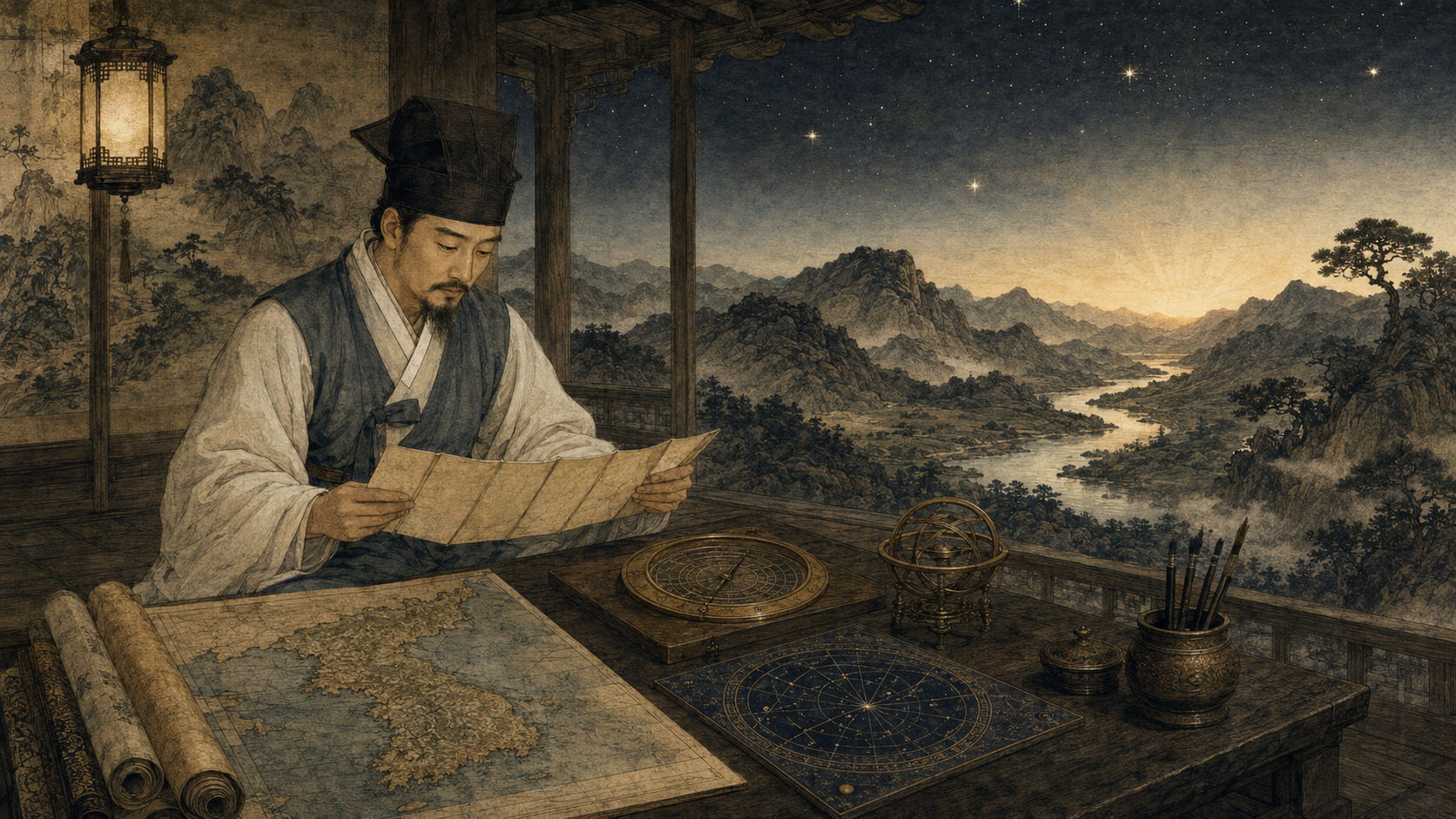
A reconstruction of the Joseon intellectual setting associated with Nam Sago. No securely authenticated lifetime manuscript of Gyeokam Yurok is known.
SALGIL reconstruction · catalogue research links below ↗05 · DOCUMENT TIMELINE
When the record changed
- Life of Nam SagoThe scholar later associated with the pen name Gyeokam lives in Joseon.
- Claimed authorshipLater tradition attributes the prophetic work to Nam Sago.
- Public circulationPrinted editions become widely available and enter religious and popular discourse.
- Character-code readingsFlexible decomposition of Chinese characters produces many modern identifications.
06 · EDITION AND WITNESS COMPARISON
The missing chain of custody
The date of a document and the date of an interpretation are recorded separately.| Witness or edition | Date | Editorial status | Why it matters |
|---|---|---|---|
| Nam Sago lifetime manuscript | 16th century | Not established | No independently authenticated witness securely closes the authorship gap. |
| Modern printed editions | 20th century | Traceable but late | Wording must be cited by publisher, date and page. |
| Online quotations | 21st century | High alteration risk | Spacing, characters and explanations often change without a source image. |
07 · MAJOR CLAIMS
Representative claims and their limits
War and refuge
Readers identify liberation, the Korean War and later Korean crises in its imagery.
A coming saviour
Characters are divided and recombined to identify a modern person.
A new age and refuge lands
Disaster is followed by renewal and protected places.
08 · WHAT ACTUALLY HAPPENED
Comparison with events
The clearly reviewable sixty-section text became public in 1977. Liberation and the Korean War therefore cannot be scored as predictions unless an independent earlier witness preserves the same wording. Similarity noticed after an event is evidence of interpretation, not automatically of foresight.09 · DISPUTES AND COUNTERARGUMENTS
Where interpretation changes
A total-fabrication thesis competes with research describing a compilation assembled from multiple older and modern source texts. Choe Joong-hyun traces 1970s re-editing while cautioning against treating every line as a single late invention. Section-by-section source, language and publication analysis is the safer method.10 · EVIDENCE SCORE & PROVISIONAL CONCLUSION
1977 witness documented · Nam attribution unverified
Nam Sago, the attributed tradition and the 1977 manuscript are documented, but evidence is insufficient to authenticate the complete sixty-section work as his lifetime writing or to score earlier historical events as hits. Status: cultural record / attribution unverified / post-event risk.11 · SOURCES AND REVIEW