ENGLISH RECORD 05
Venerable Tanheo
呑虛 宅成 · 1913–1983ARCHIVE GUIDE
Overview
A Korean Buddhist scholar and translator who connected Huayan thought, the I Ching and Jeongyeok to questions about civilization and the future. His work is larger than the isolated predictions circulated online.
TANHEO SPECIAL ARCHIVE · PERSON AND TEXTS
A life far larger than the label ‘prophet’
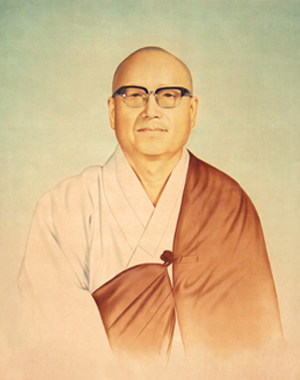
Existing image credit: Tanheo Memorial Museum ↗
Photographer and date unverified
Tanheo Taekseong (呑虛 宅成, 1913–1983) studied the Confucian classics, entered monastic life at Odaesan, interpreted Huayan thought, translated Buddhist texts and educated later generations. Future-oriented remarks must be read within that complete life and intellectual setting.
- Dharma name
- Taekseong 宅成
- Pen name
- Tanheo 呑虛
- Primary setting
- Odaesan · translation · education
- 01Born in Gimje
Born Kim Geum-taek and educated in classical Chinese and the Confucian canon.
- 02Entered Sangwonsa
His exchange with Master Hanam led him into monastic practice and scholarship at Odaesan.
- 03Teaching and education
He trained monastic and lay students while building a community of study.
- 04Publication date under review
The AKS biography gives 1974; its separate work entry gives 1975. The edition’s colophon still needs checking.
- 05Death at Odaesan
Books, manuscripts, recorded lectures and disciples' accounts became the basis for later study.
- 06Memorial museum opened
A museum dedicated to preserving and studying his materials opened in Seoul.
FOUR AXES · INTELLECTUAL FRAME
Four ideas come before any prediction
Huayan
A relational view in which beings arise through interdependence; central to his translation, education and view of civilization.
I Ching
A classical system for thinking about change in nature, human life and society.
Jeongyeok
A modern Korean tradition describing a transition from an earlier to a later cosmic order; it is not a geophysical model.
Integration
A method of bringing Buddhist, Confucian and Daoist questions into conversation without erasing their differences.
EIGHT RESEARCH TOPICS · READING GUIDE
Eight topics in Tanheo’s life and legacy
Expand a topic for context and evidence gaps. These editorial reconstructions are not historical evidence.
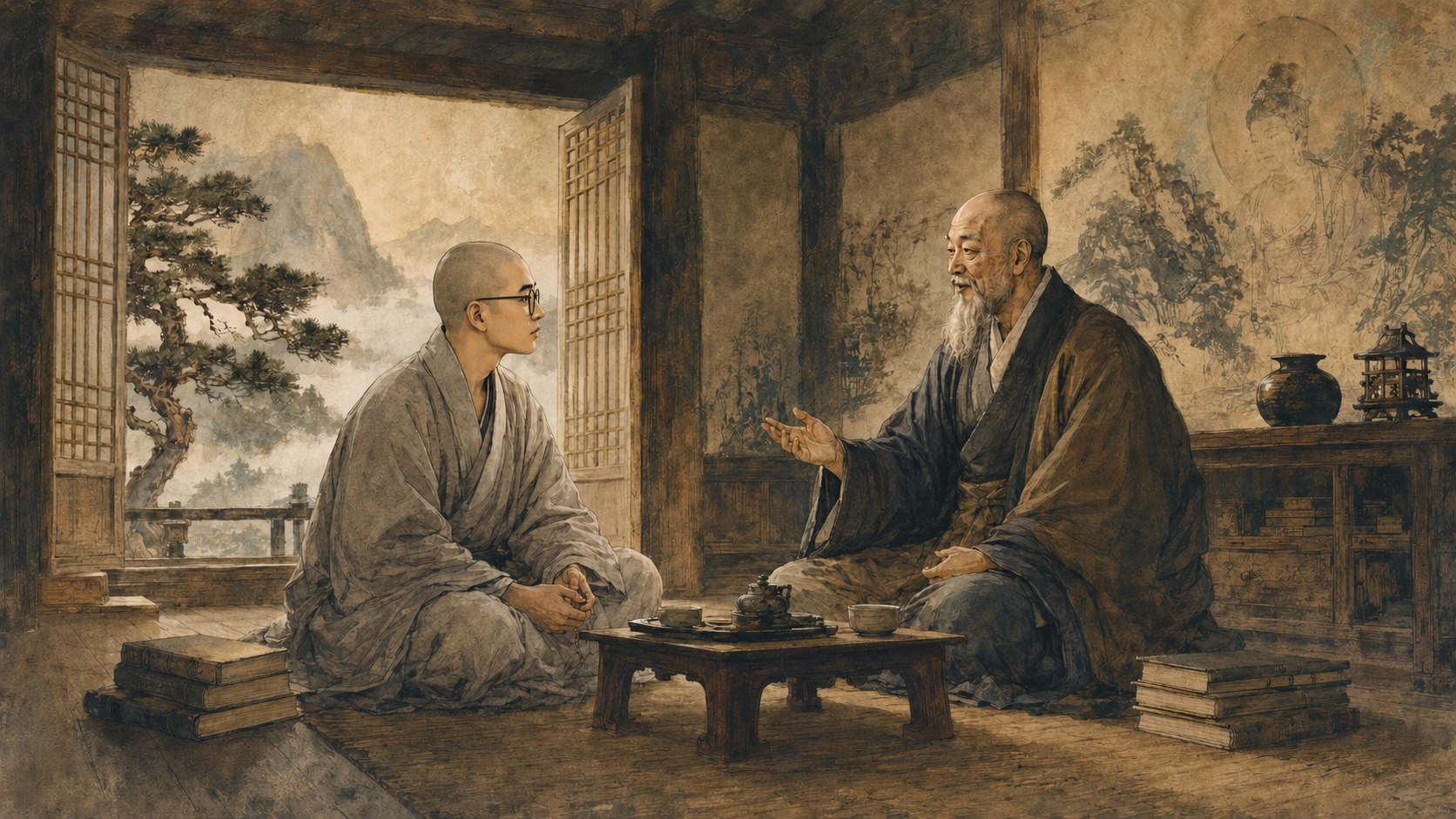
Life and practice
Hanam, ordination, meditation, teaching and translation
Read more: Life and practice
Separate biography from transmission
The AKS Taekseong entry supports a biographical outline. A direct quotation from the Hanam exchange still needs an identifiable letter or contemporary record.
Read the timeline →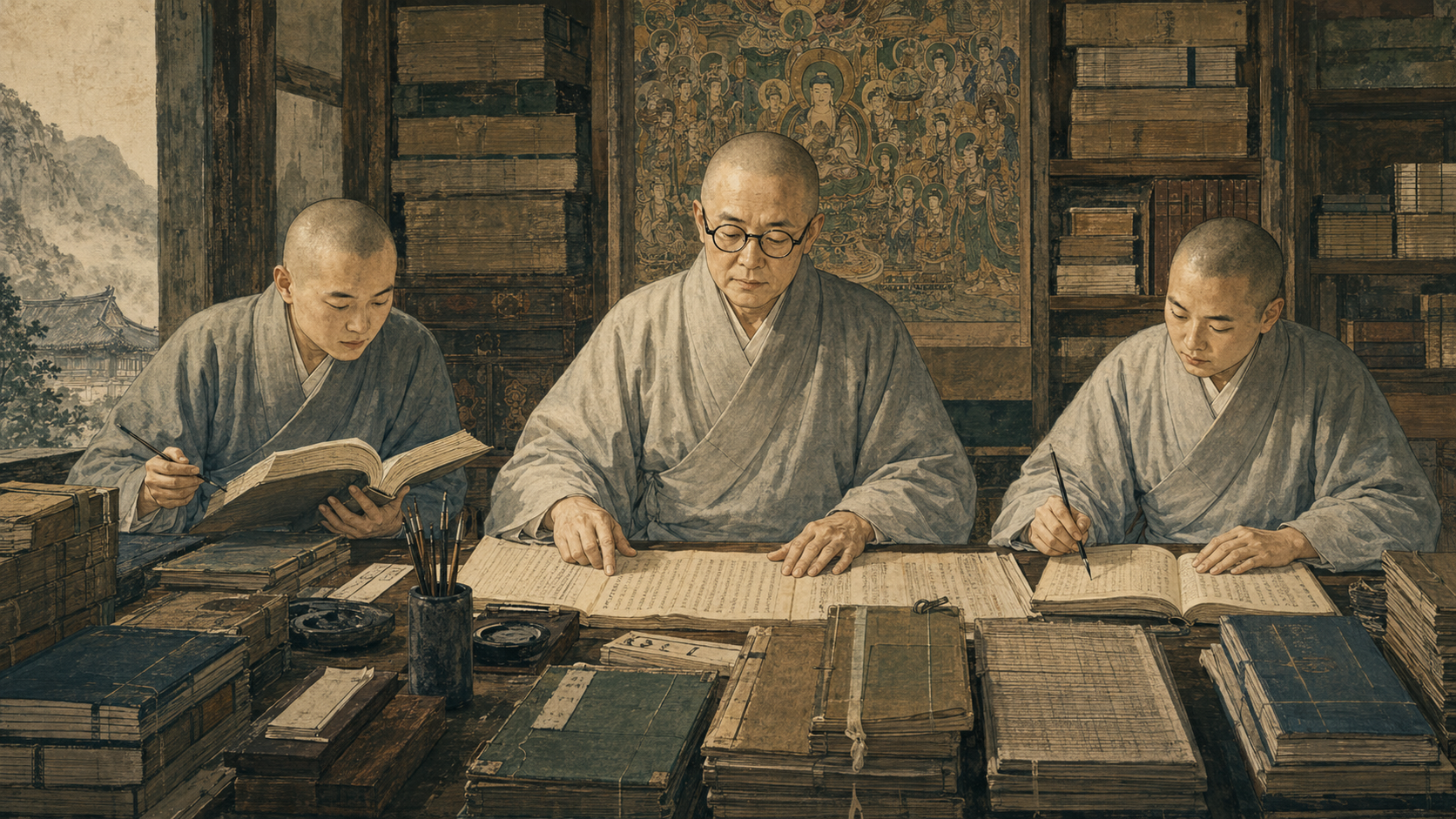
Huayan and translation
Translation, collation, commentary and education around the Huayan corpus
Read more: Huayan and translation
Start with the structure of the translated work
The work brings scripture and commentary together. The bibliographic comparison below preserves a disagreement over its publication year. A scriptural passage is not automatically Tanheo’s own prediction.
Compare references →
Cosmic change and Jeongyeok
Classical concepts, Tanheo's interpretation and later disaster readings kept separate
Read more: Cosmic change and Jeongyeok
Distinguish concepts from physical events
Earlier and later cosmic orders require philosophical context. Connecting them to axial shifts or disasters also requires exact wording, a date and independent observational evidence.
Read the audit →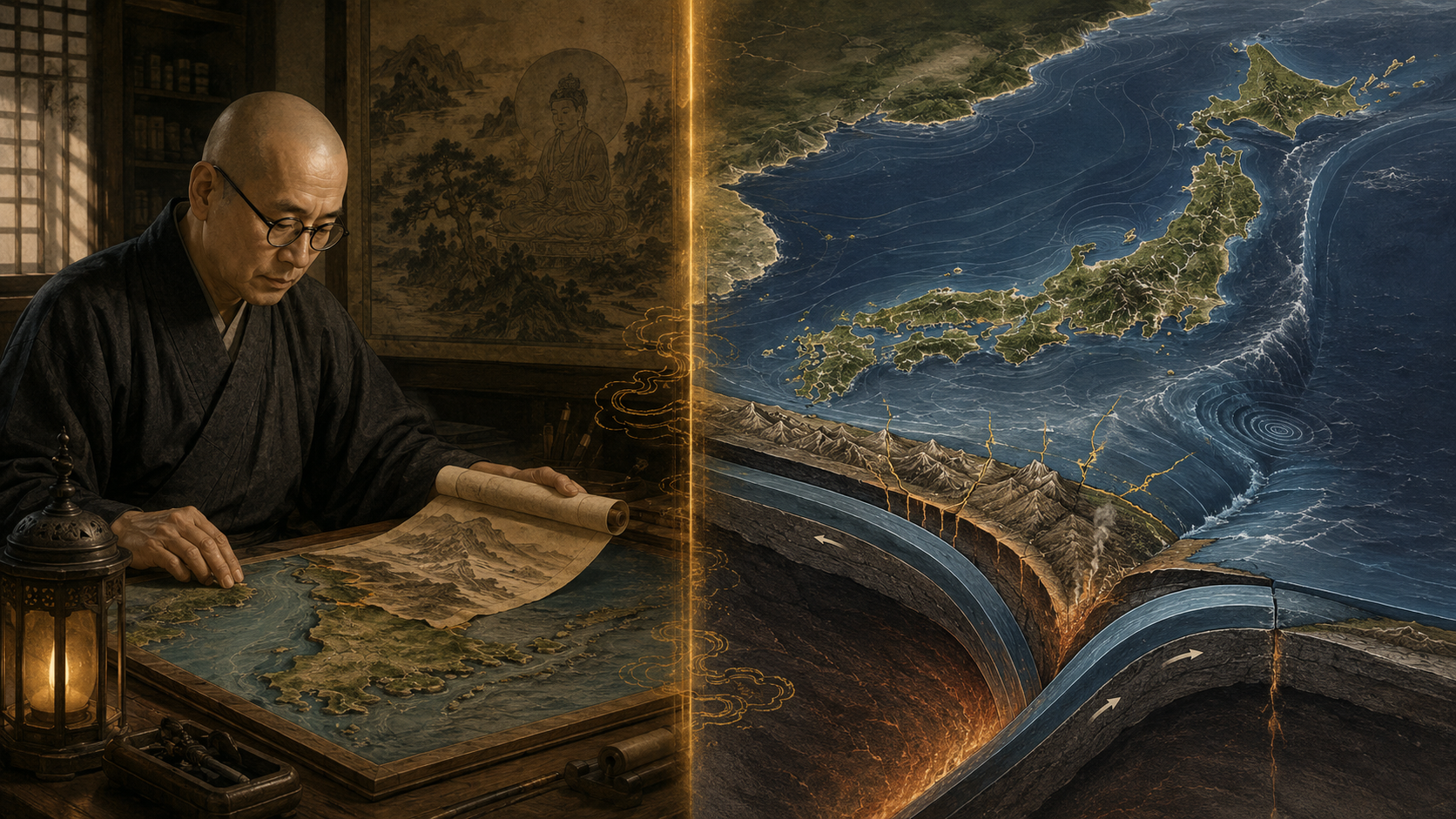
Japan and geological change
Research questions about wording and publication before an event
Read more: Japan and geological change
Establish the original Japan claim first
No lifetime text naming a particular earthquake or scale of submergence has been established on this page. Similarity after an event cannot establish a successful prediction.
See evidence gaps →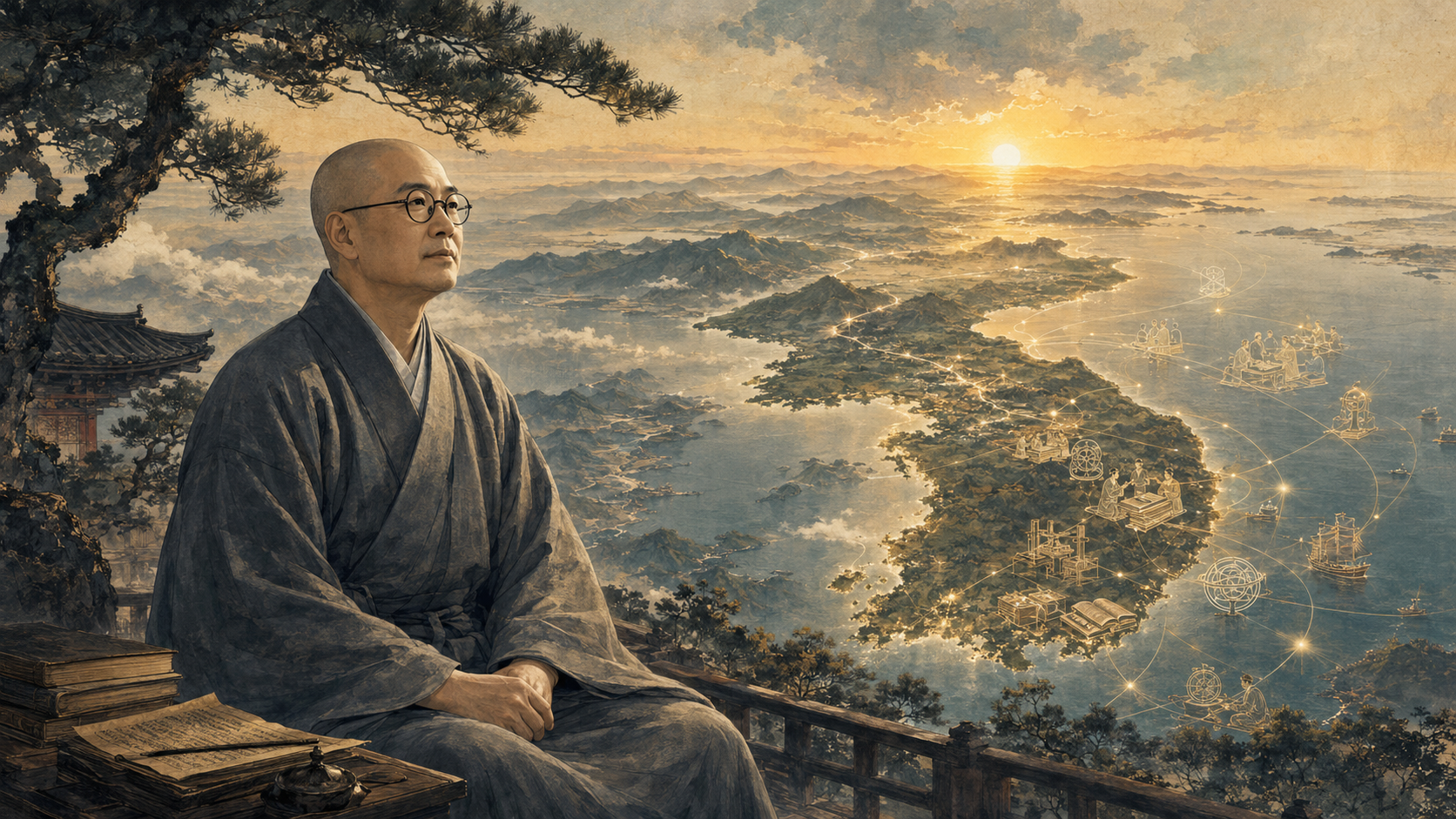
Korea's future
Cultural, educational and international outlook separated from dated prediction
Read more: Korea's future
Define what a future role for Korea means
Cultural and educational aspirations have different criteria from economic or political rankings. The full lecture and the meaning of ‘center’ are needed before matching the claim to an event.
Read the criteria →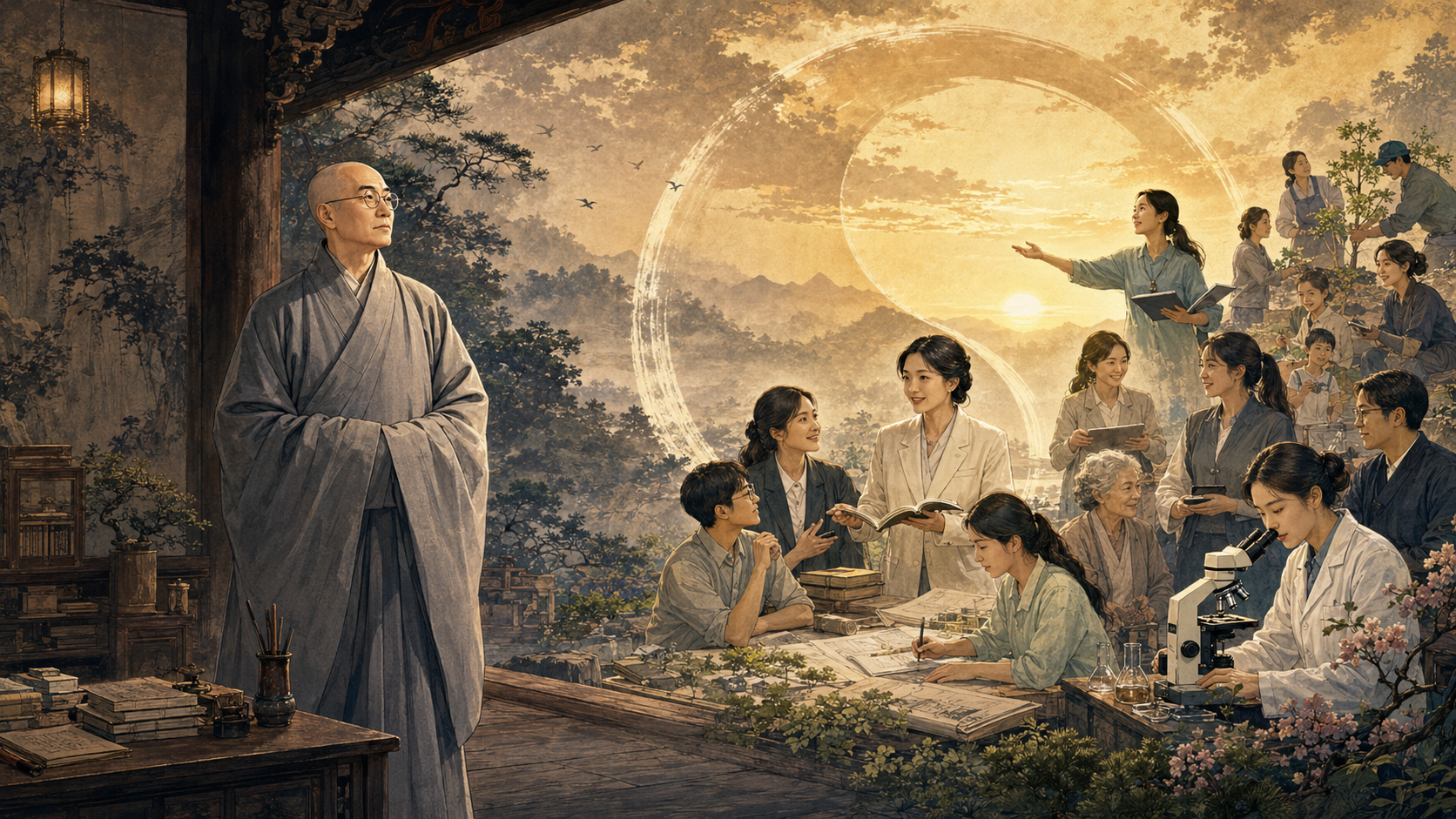
A women-centered age
The source, historical setting and later social interpretation
Read more: A women-centered age
Define a women-centered age
Social status, legal rights and a leader’s gender are different measures. Without original wording and a date, the phrase cannot be tied to a particular election or social change.
Read the limitations →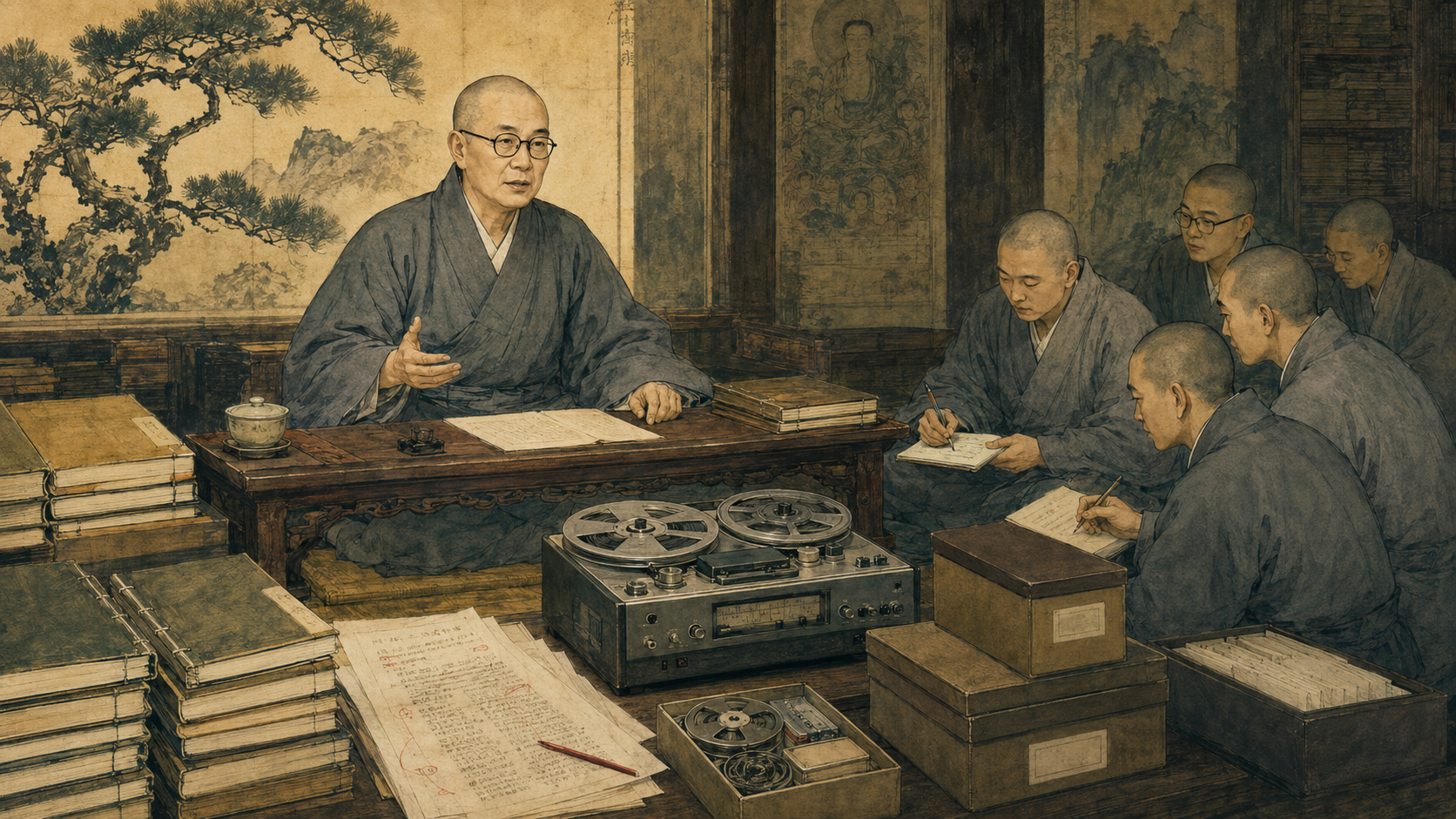
Recorded voice and works
Books, handwriting, audio, transcripts and recollection graded separately
Read more: Recorded voice and works
A bibliography is not access to the original
A catalog entry does not establish that a specific quotation appears in a book. Citation requires edition, volume and page, or a timestamp and provenance for audio. Direct quotations remain withheld.
Read the source guide →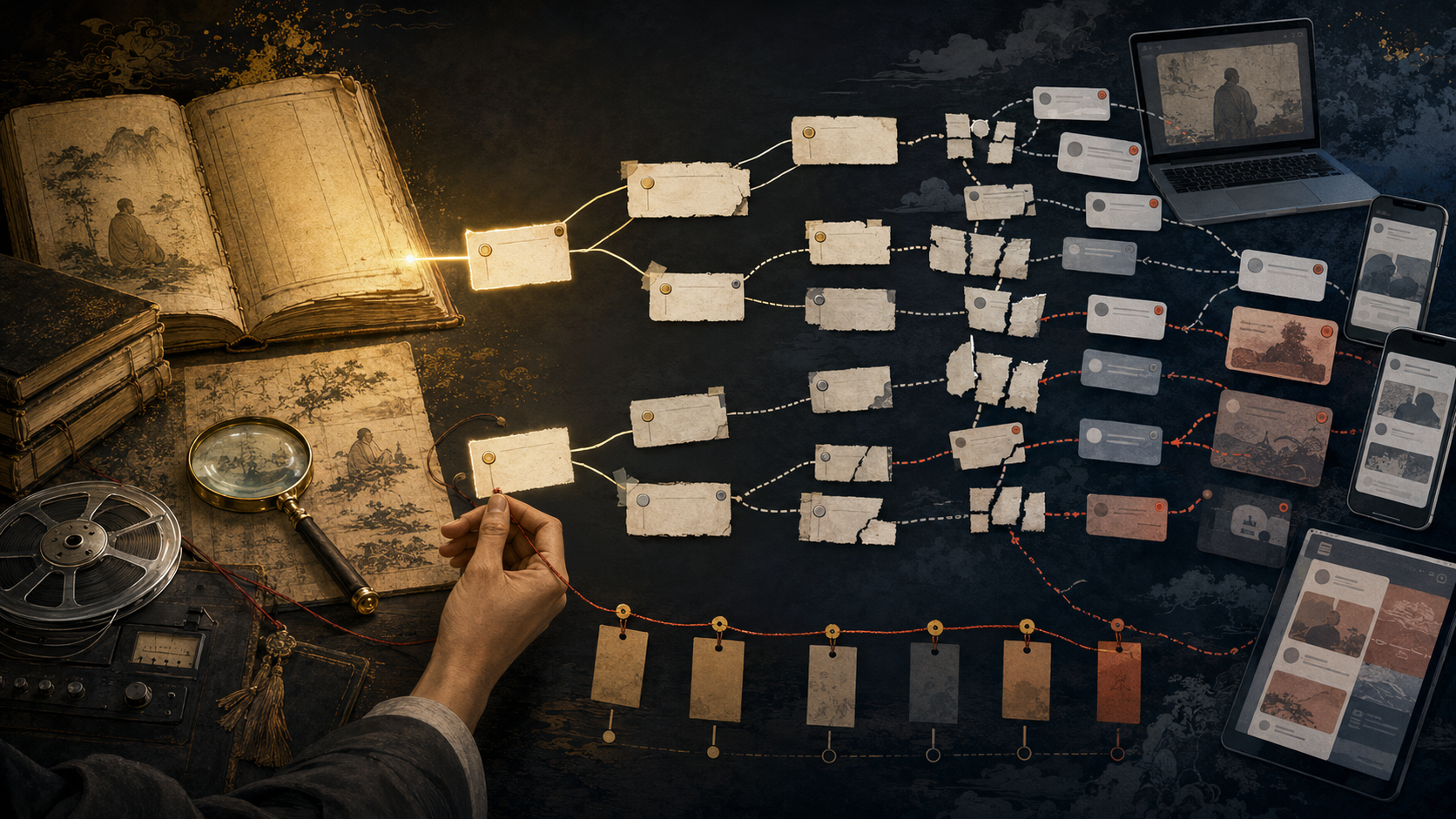
Internet quotation forensics
Evidence needed to distinguish direct statements from later attributions
Read more: Internet quotation forensics
A name is not a citation
Unreferenced images, isolated subtitles and post-event posts do not establish an original statement. Trace the original, transcript or translation, and later quotation separately.
Read the method →TEXT & VOICE · SOURCE MAP
Different media carry different evidentiary weight
A–D describe source categories; they are not grades assigned to the claims on this page.
Books, translations and handwriting
Cite exact edition, volume and page from lifetime publications or manuscripts.
Recorded talks and contemporary transcripts
Prefer full audio and context; compare subtitles in later edited video with the recording.
Temple, museum and contemporary records
Strong for biography and dates, but not a substitute for the original wording of a claim.
Disciples' and associates' recollections
Valuable testimony that must be marked as memory and cross-checked.
Unattributed online quotations
Leave unverified when book, page, recording and publication date are absent.
CLAIM AUDIT · JUDGE THE SENTENCE, NOT THE PERSON
The more famous the claim, the narrower the source check
These are editorial summaries of attributed claims, not direct quotations. Exact originals, page or audio references, and first publication dates remain unverified for every entry. No success or failure verdict is assigned.
| Circulating claim | Evidence required | Current record | Provisional status |
|---|---|---|---|
| Major geological change will affect Japan | Exact lifetime wording and publication date | The general attribution circulates, but dates, named earthquakes and scale vary; line-level verification remains necessary. | Original unverified |
| Axis change will alter climate and land | Jeongyeok wording plus independent geoscience | Philosophical cosmic change and a physical axial-shift claim cannot be treated as the same proposition. | Category boundary |
| Korea will lead a future spiritual civilization | Full lecture context and a testable criterion | The full context is needed to distinguish an outlook from a specific forecast. Exact wording and date are not established here. | Context unverified |
| A women-centered later age will open | Direct wording, date and a definition of the claim | The expression can be compared with social change but is too broad to score as one event. | Low specificity |
| Dated disaster claims shared online | A pre-event book, recording or newspaper | A sentence carrying only Tanheo's name is not adopted as his direct statement. | Earliest source unknown |
SALGIL VERDICT · PROVISIONAL
The record of the person and works is strong; each prediction still requires its own verdict.
Tanheo is a twentieth-century figure with a comparatively rich record of publications, translations, audio and institutional documentation. That provides a strong basis for studying his life and ideas. It does not authenticate every prediction later assigned to him online. SALGIL does not score the person; it evaluates only an individual claim whose pre-event wording can be traced.SOURCE REGISTER
Checked references and further research
Editorial and source review · 21 September 202601–02 are secondary references read and compared for this revision. 03–07 are research starting points, not citations authenticating a prediction.
Revision history · 21 September 2026
Merged duplicate claims, verdicts and references; replaced the unexplained 78-point score with evidence status; added expandable topic guides and reconstruction captions; linked detailed references and recorded the publication-date discrepancy. Prediction originals remain unverified.