ENGLISH RECORD 51
Japan-Sinking Claims — Fiction, Viral Prophecy and Geology
No single ancient or modern primary text establishes a dated prediction that the whole Japanese archipelago will disappear. Sakyo Komatsu’s 1973 novel Japan Sinks is fiction; hazard agencies assess earthquake, tsunami and coastal-risk scenarios rather than an archipelago-wide disappearance date.01 · WHAT IT IS
Overview
The phrase ‘Japan will sink’ combines disaster fiction, unattributed viral prediction, subduction-zone risk, local vertical land movement and long-term sea-level rise. This record separates those layers instead of treating them as one forecast.
02 · ORIGINAL TEXT AND EARLIEST SOURCE
What can be traced?
03 · HISTORICAL BACKGROUND
The world behind the text
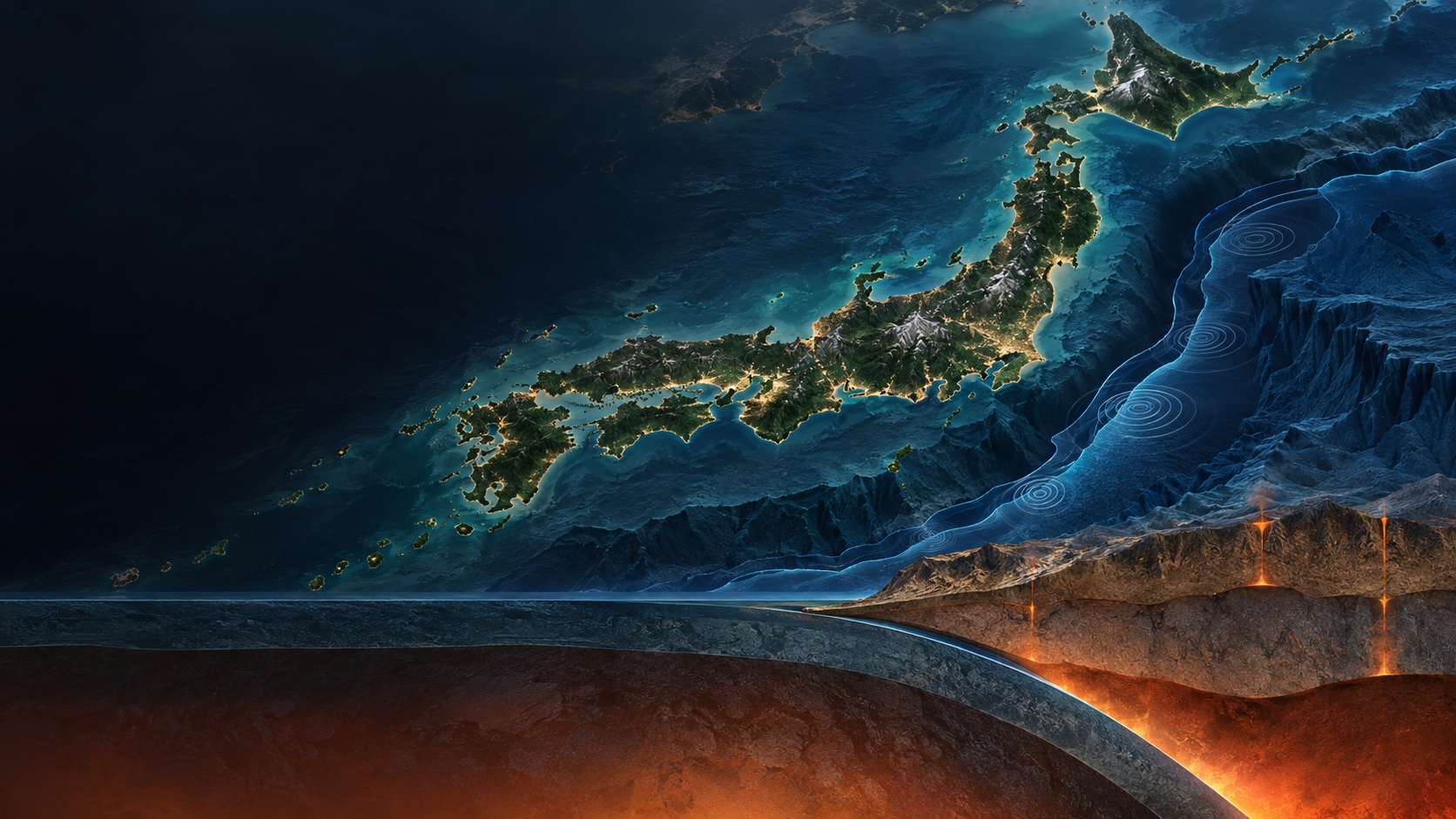
An editorial geological reconstruction separating Japan-wide ‘sinking’ claims from the documented hazards of subduction, tsunami and local coastal land movement. It is not an evacuation map or a forecast.
SALGIL original illustration · generated for this record ↗05 · DOCUMENT TIMELINE
When the record changed
- Japan Sinks publishedSakyo Komatsu’s disaster novel makes archipelago-scale collapse a widely recognizable fictional scenario.
- Subduction-zone monitoringJapanese and international agencies assess earthquake, tsunami and coastal-risk scenarios without naming an archipelago-wide disappearance date.
- Dates and mechanisms multiplyPosts merge fiction, unnamed seers, Nankai risk and sea-level rise while often losing a traceable original source.
- SALGIL source-layer reviewFiction, viral claim, hazard evidence and long-term coastal exposure are retained as separate records.
06 · EDITION AND WITNESS COMPARISON
Do not turn four different records into one prophecy
The date of a document and the date of an interpretation are recorded separately.| Witness or edition | Date | Editorial status | Why it matters |
|---|---|---|---|
| Japan Sinks · Sakyo Komatsu | 1973 | Published fiction | Documents a disaster narrative, not a scientific prediction or an event-era warning. |
| Japan Meteorological Agency and Nankai preparedness material | Current institutional record | Hazard evidence | Documents monitoring, scenarios and preparedness; it does not claim Japan will wholly sink. |
| Named viral post with original URL and date | Varies by claim | Required claim witness | Only a preserved pre-event post can establish what a particular person actually said. |
| Sea-level observation and projection | Ongoing | Long-term exposure evidence | Tests gradual coastal risk rather than a sudden prophecy event. |
07 · MAJOR CLAIMS
Representative claims and their limits
Central claim
A named earthquake, crustal event or sea-level rise will submerge most of Japan on a predicted date.
Original-first test
The claim is checked against Japan Meteorological Agency · earthquake activity, not against a later summary.
Outcome test
Subduction can produce severe shaking, tsunami and local uplift or subsidence. That documented risk does not support the advertised claim that all of Japan will suddenly sink on a named date.
08 · WHAT ACTUALLY HAPPENED
Comparison with events
Subduction can produce severe shaking, tsunami and local uplift or subsidence. That documented risk does not support the advertised claim that all of Japan will suddenly sink on a named date.09 · DISPUTES AND COUNTERARGUMENTS
Where interpretation changes
The main dispute concerns the distance between 1973–present and 1973 disaster fiction · unattributed viral claims · Nankai risk communication · coastal climate adaptation. Translation, selective quotation, changed definitions and hindsight can make a broad record appear more exact than it was. Competing readings are therefore preserved rather than silently merged.10 · EVIDENCE SCORE & PROVISIONAL CONCLUSION
Real hazards documented · total-sinking prophecy unverified
The phrase ‘Japan will sink’ combines disaster fiction, unattributed viral prediction, subduction-zone risk, local vertical land movement and long-term sea-level rise. This record separates those layers instead of treating them as one forecast. SALGIL's provisional score reflects source traceability and testability, not religious worth or cultural importance.11 · SOURCES AND REVIEW