ENGLISH RECORD 06
Prophecy of the Popes
Prophetia Sancti MalachiaePublished in 1595; attributed to the twelfth centuryIreland and Rome · EuropePapal succession · apocalyptic list
01 · WHAT IT IS
Overview
A list of 112 short Latin mottos said to characterize popes from Celestine II to a final figure called Peter the Roman.
02 · ORIGINAL TEXT AND EARLIEST SOURCE
What can be traced?
03 · HISTORICAL BACKGROUND
The world behind the text
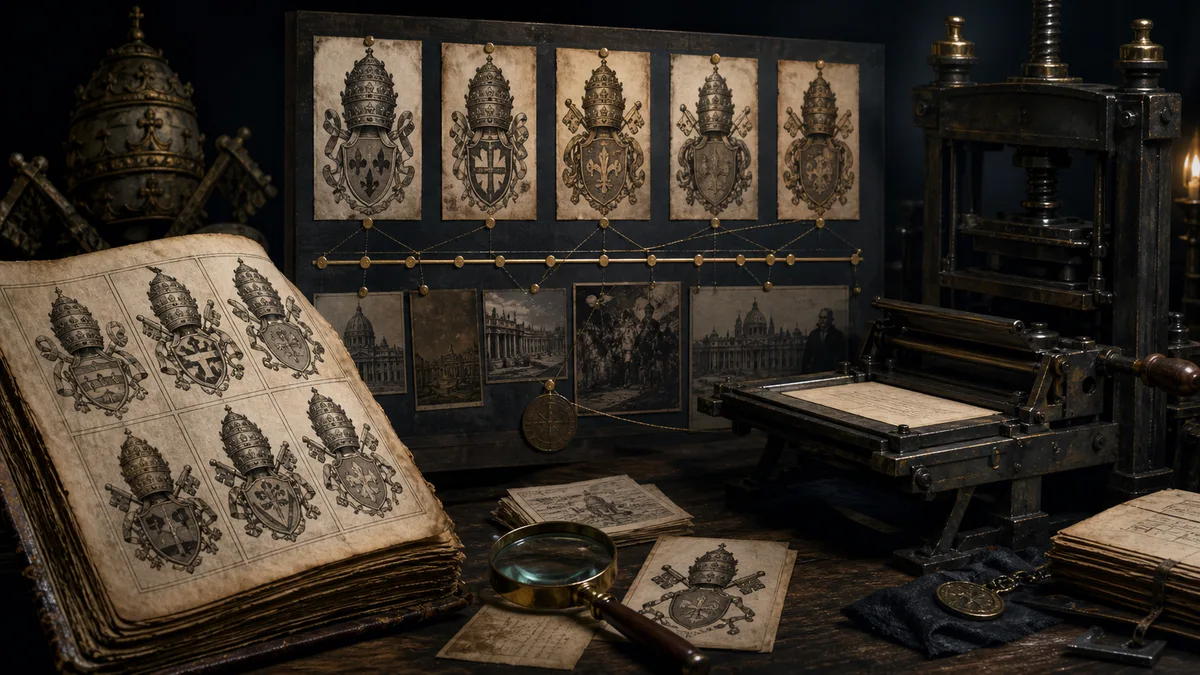
An original editorial reconstruction created specifically for this archive record. It visualizes the subject and is not documentary evidence or an authenticated historical image.
SALGIL original illustration · record sources below ↗05 · DOCUMENT TIMELINE
When the record changed
- Life of MalachyThe Irish archbishop to whom the list is later attributed.
- Conclave contextA politically charged papal election provides a possible setting for composition.
- First known printingArnold Wion publishes the mottos in Lignum Vitae.
- Last-pope speculationFlexible pope counts and Peter the Roman claims repeatedly generate deadlines.
06 · EDITION AND WITNESS COMPARISON
Four centuries separate author and publication
The date of a document and the date of an interpretation are recorded separately.| Witness or edition | Date | Editorial status | Why it matters |
|---|---|---|---|
| Alleged Roman manuscript | 1139 tradition | Not located | The claimed original has no secure archival chain. |
| Wion, Lignum Vitae | 1595 | First verifiable text | The historical baseline for wording and order. |
| Modern numbered pope lists | 19th–21st centuries | Derived presentation | Numbering, matching rules and end-date assumptions vary. |
07 · MAJOR CLAIMS
Representative claims and their limits
Accurate early mottos
Mottos before the 1590s often resemble birthplace, arms or titles of popes.
Weaker later matches
Post-publication mottos require broader associations.
Peter the Roman
The final passage describes persecution and Rome's destruction.
08 · WHAT ACTUALLY HAPPENED
Comparison with events
The list's apparent precision is strongest where a sixteenth-century compiler could know the answer. Later popes have been matched through flexible translation, symbols, religious orders or locations, sometimes with several alternatives.09 · DISPUTES AND COUNTERARGUMENTS
Where interpretation changes
Scholars debate authorship, the possible political candidate favored in 1590 and how to count disputed or short-lived popes. Belief in a final motto should be separated from historical authentication.10 · EVIDENCE SCORE & PROVISIONAL CONCLUSION
Source caution
The 1595 text is real; the twelfth-century attribution is unproven. It is a valuable case of how a late document can gain authority through an ancient name.11 · SOURCES AND REVIEW